Sindoor in Nepali Marriage: Meaning, Tradition, and Importance
There are many moments in a Nepali wedding that stay with you.
The music. The gathering. The rituals that move from one step to another.
But among all of them, there is one moment that feels especially still.
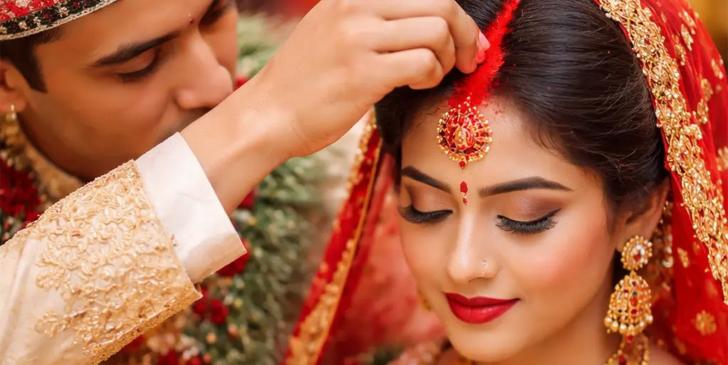
When the groom applies sindoor.
Everything slows down for a second. People watch quietly. Cameras pause, but emotions don’t.
Because everyone knows—this is not just another ritual.
What Sindoor Really Represents
On the surface, sindoor is simple.
A red powder, applied along the parting of the bride’s hair.
But in our culture, it carries a meaning that goes far beyond its appearance.
It marks the beginning of a new identity.
It symbolises commitment. Responsibility. A shared life ahead.
For many women, it is also a visible sign of marriage—something that is understood instantly, without words.
A Tradition That Has Stayed Strong
Sindoor has been part of Hindu Nepali weddings for generations.
Even as weddings have changed—venues, outfits, music—this ritual has remained almost untouched.
Why?
Because it is not about trend. It is about continuity.
It connects the present to the past. What we see today is not new—it is something that has been carried forward, quietly, through families and time.
The Moment It Happens
If you’ve attended a Nepali wedding, you’ll know this moment well.
The bride sits calmly. The groom, often guided by a priest or family member, applies sindoor.
There is usually a mix of emotions in that moment.
Happiness. Nervousness. A sense of finality.
For the bride, it often feels like a clear shift—from one phase of life to another.
And for the families, it’s the point where everything becomes real.
More Than Just a Ritual
It’s easy to look at sindoor as just a symbolic act.
But in reality, it reflects something deeper about how marriage is understood in Nepali society.
Marriage is not seen as temporary.
It is expected to be stable, long-term, and built with care.
Sindoor quietly represents that expectation.
Not in a heavy way—but in a steady, cultural understanding that marriage carries responsibility along with joy.
Changing Perspectives, Same Meaning
Today, things are evolving.
Some women choose when and how they wear sindoor. Some wear it daily. Others only on special occasions.
In urban areas and among younger generations, there is more personal choice.
But interestingly, the meaning has not disappeared.
Even when the practice becomes flexible, the symbolism remains respected.
A Cultural Identity Beyond Nepal
For Nepalis living abroad, sindoor often becomes even more meaningful.
It is not just a part of the wedding—it becomes a visible connection to culture.
Something that reminds you where you come from.
Something that carries familiarity, even in a completely different environment.
In the End
Sindoor is simple in form—but deep in meaning.
It does not need explanation for those who understand it.
It represents a moment, a commitment, and a cultural identity that has lasted through time.
And even as weddings continue to evolve,
this small but powerful ritual continues to hold its place—
quietly, but meaningfully.